Showing posts with label older youth. Show all posts

Tuesday, July 15, 2008

New study on youth smoking and perceived availability

An interesting study on predictors of youth smoking was published this week in the journal Annals of Family Medicine. The study examines whether perceived availability of cigarettes is a strong predictor of whether youth will start smoking.
The conclusion: yes. If youth perceive cigarettes are available, they are more likely to start smoking. The study also found that youth who perceived availability of cigarettes and who had smokers among their peer group were more likely to start smoking than those who have one or the other factor but not both.

There are some limitations with this study. First, as the authors acknowledge, self-reporting of problematic behaviors is not always accurate or dependable, and it is possible youth who smoked reported that they did not smoke.

Second, and perhaps more critically, this study stops short of proving a causal relationship, and shows instead that availability of cigarettes and future smoking are associated (hence the language about availability being a "predictor" of future use). There could be other factors at work in such an association. For instance, youth who perceive that cigarettes are available may be part of a social group or neighborhood in which cigarettes are more visible than in other areas, or in which youth smoking is less taboo. While the correlation between availability and future smoking is strong, it's important to remember that reducing perceived availability won't necessarily get rid of other problems that could be contributing to incidence of youth smoking.

There are positive outcomes to be taken from this research. It gives programs, families, schools and communities an angle from which to help prevent tobacco use from an early age, and examine further whether availability causes future smoking or simply predicts it.

Also, this research further strengthens the idea that tobacco use is correlated with social behavior. This helps build the case that social behavior is useful for helping teens -- or adults -- quit smoking. Another study, published in the New England Journal of Medicine this year, suggests that people are more likely to quit when part of large social groups that are quitting. Perhaps youth development can try this approach with youth who are already addicted?


Thanks to RoOobie for the Creative Commons photo

Tuesday, July 8, 2008

Inclusion of children and youth with developmental disabilities II

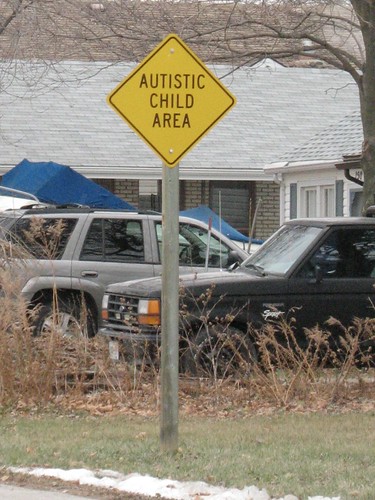
This is part 2 in an ongoing series featuring SOAR's paper on including children and youth with developmental disabilities in after-school and youth development programs. Inclusion means creating or sustaining programs for children and youth to interact together, across all lines of ability and development. The sign at the left is not what we might call inclusive.


...Continued from July 3rd:


CHANGING POLICY

Programs and communities can articulate their commitments to inclusion through developing and following written policies. At a program level, organizations can include in their mission, values or policy statements about how and why they are inclusive of children with disabilities, (as well as other children and youth who are often disenfranchised). At a community level, local governments, community collaboratives, and networks can make written commitments to inclusion, also focusing on why they value inclusion and what they can do to increase it.

Cities can commit to inclusion by providing support, training, and funding for all programs to become inclusive, just as communities have committed to other large efforts such as accrediting child care centers or ending homelessness. Some communities are already starting to look at this option. In its London-based report Listening to Parents of Disabled Children About Childcare, funded by the Department for Children, Schools & Families and the London Development Agency, the National Childcare Campaign Daycare Trust recommends a goal of “ensuring that every childcare setting in London is disability-friendly.”
[i] Such recommendations can expand beyond the childcare world to after-school as well; communities can set goals to help as many local programs as possible become inclusive.


APPROACHES: CHALLENGE-BASED AND ASSET-BASED

· Challenge-based Approach: How to meet basic needs, manage risk, and avoid problems. Focus on safety, barriers, cost, bias, and needs that seem difficult to meet.

In discussions on inclusion of children and youth with developmental disabilities, it is common to hear about the challenges involved. Parents and caregivers face difficulties finding programs for their children. Advocates work hard to raise awareness and increase funding for inclusive programs. Programs face hurdles as they develop, expand or change.

In programming in particular, the discussion often comes down to overcoming barriers. How will we prevent this child from getting hurt? From feeling isolated? How can we afford more staff? How will we make activities physically accessible? How will we make them understandable to this child? How do we manage behavior issues? Challenges stem from funding, liability issues, safety, old ways of doing things, and difficulty changing attitudes and expectations. Further, programs that are marketed as “inclusive” may not be as popular among families whose children do not have disabilities; there may be an assumption that “inclusive” is code for “primarily or exclusively for children with special needs” or that children and youth without disabilities will not be prioritized. Additionally, such programs face pervasive fear-driven bias against those with disabilities that impacts the willingness of families to send children without disabilities to such programs. Changing attitudes is a long-term, systemic-level project that can feel daunting.

Funding in particular stands out as the largest issue for many programs. Inclusion and support of children with disabilities is very realistically expensive, in terms of staffing, facility changes, program changes, just to name a few areas.

These are all genuine difficulties and must be addressed frankly. Yet, a challenge-based approach misses the positive reasons we create youth development programming in the first place. All children and youth deserve to have places to go outside of school and home where they experience friendship, creativity, leadership, learning, caring adults, interesting activities, and nurturing. By adding an asset-based approach to balance out our challenge-based approach, we keep in mind why we’re creating inclusive programming in the first place. We do this because the programming itself is valuable.

· Asset-based Approach: How to ensure children and youth are getting the beneficial assets, experiences, and opportunities they deserve. Focus on quality, youth involvement, and positive experience.

An asset-based approach reflects the values of inclusion, namely, that all children and youth benefit from positive experiences, and that we benefit as a society from including them. Focusing on assets reminds us that inclusion is beneficial for children both with and without disabilities. Inclusive programs highlight similarities among children and youth across lines of ability.
[ii]

Both challenge-based and asset-based approaches are necessary. In the positive light of assets, glossing over challenges can put participants at risk of negative or unsafe experiences. A balance between challenge-based and asset-based approaches sets communities up to succeed.


PARTNERSHIPS AND COLLABORATIONS

Collaboration is useful at all levels of programming, particularly curriculum design and program development. Some groups developing model programs, such as the Intentionally Inclusive 4-H Club Program model of North Carolina, include collaborative partnership from the outset.
[iii] Collaboration on an ongoing basis also helps ensure successful programming. At all stages, from curriculum development to program maintenance to sharing of models, partners might include:
  • Youth with disabilities (and youth without disabilities)
  • Parents and caregivers
  • Adults with a range of developmental disabilities who can provide a personal perspective about how programs could have served them better as youth
  • Representatives from youth programs, including direct service staff
  • Students and specialists from universities working in relevant areas
  • Health professionals and specialists
  • Home care providers
  • Community advocates (individuals or organizations)
  • Schools
  • Those providing resources to people with developmental disabilities (existing specialized programs, transportation services, educators, etc)
  • Funders (foundations and/or corporate sponsors)
  • Existing programs
  • Facilities for programming (camps, universities, parks, etc)


Including a wide range of stakeholders, particularly the youth and families who will be affected, is triply beneficial. First, programming developed with insights, cautions, and ideas of people coming from each of those perspectives will avoid the pitfalls that might seem obvious to one but not the other. Second, including voices such as youth, families and staff in development sends a powerful message internally and externally that the program in question empowers and comes from the community served. Third, collaboration can be beneficial for outreach and marketing of the program since those developing the program will feel ownership of it, and want it to succeed. Families can spread the word to other families; state professionals can publicize the program within their networks.


YOUTH AND FAMILY INVOLVEMENT

As often-disenfranchised members of society, youth need opportunities to advocate for themselves and other youth, to make decisions about the things that impact them, and to have a voice where usually only adults are heard. These opportunities are part of positive youth development experiences for all youth. Youth with disabilities face a double-whammy of ageism and ableism; not only do they experience the disenfranchisement of being young, they also experience a society that overlooks their ability to think, contribute ideas, and participate in decision making because of their disabilities. This is especially true for youth whose disabilities affect language and communication.

Consequently, it is crucial to include children and youth in program development as well as in determining how best to include them in a given program. Certainly different youth will have different extents to which they can contribute, but all can contribute in a way that is meaningful and realistic for their individual abilities.

Further, youth and families know their own situations, needs, preferences and abilities better than anyone else. Programs will be more likely to succeed at inclusion when knowledge from children, youth, and families is incorporated at all levels.

Older youth and young adults can provide particularly useful perspectives, being able to reflect on what would have made programs better for them when they were young.

Programs should bear in mind that parents and caregivers may have experienced setbacks and challenges when trying to involve their children in programs in the past. Having faced rejection from programs, or because of fears that their children will not be accepted, some parents and caregivers will not inform a program of their child’s disability, or will wait until a late opportunity to do so. Proactively creating a safe, welcoming environment will help parents and caregivers feel comfortable and welcome. Involving parents and caregivers as partners in the program will support and empower them while programs benefit from their knowledge. Some of the resources at the end of this report offer suggestions and scenarios to help programs work with parents and caregivers.

Family support and involvement is an ongoing process. As with any parents or caregivers, programs should communicate successes as well as challenges.
[iv] Families will appreciate knowing the ways in which their children are growing and thriving. Just as children and youth can connect with peers through integrated programs, families can connect to other families with children with disabilities as well as with typically-developing children.[v]
When families have the option to be involved as volunteers or assistants, programs will get better results because the family members have become true stakeholders in the process. With work and life schedules, this is not always realistic for all families, and assorted types of optional volunteer and engagement opportunities should be available to match the interests, skills, and time constraints of the families involved.

[i] National Childcare Campaign Daycare Trust. “Listening to parents of disabled children about childcare.” Department for Children, Schools & Families and the London Development Agency, 2007.
[ii] Siperstein et al., 2007
[iii] Stumpf et al., 2002
[iv] Harper-Whalen, Susan Ed.M., Morris, Sandra L., B.A. “Child Care Plus Curriculum on Inclusion: Facilitator’s Guide.” Child Care Plus. Missoula: The University of Montana, 2000.
[v] Mulvihill et al., 2004

Thanks to jbcurio for the flickr Creative Commons photo.

Thursday, April 24, 2008

GLBTQ youth and suicide prevention

by Heather Carter, Youth Suicide Prevention Program

In April, 1995, a boy who identified as bisexual and two of his friends were viciously assaulted by four classmates. The assault sent this boy into a depression that required hospitalization. Soon after, he took a massive overdose of pills and died. He didn't leave a suicide note, but he had said to his mother before he was hospitalized that he was just tired of coping. It was the constant knowledge that at any time he could be attacked again simply because of who he was, that at any time his friends could be attacked for the same reason, that, despite the love of his family and friends, all he could see ahead was a lifetime of facing a world filled with hate and violence, going from one assault to another. He was 17 years old. (Provided by Gabi Clayton)

This is just one example of the pain, despair, and suicidal thoughts that GLBTQ (gay, lesbian, bisexual, transgender, and questioning) youth may face due to issues related to their sexual orientation and/or gender identity. There is a need to focus on GLBTQ youth and suicide because of their increased risk for suicidal behaviors due (in part) to feelings of isolation, homophobia, (real or fear of) rejection by family and friends, internal conflict, and their coming out experiences.

  • Approximately 30% of GLB youth report at least one suicide attempt within the past year. (Data from 7 different national studies conducted within the past 10 years)

  • GLB youth report lower levels of each of the following “protective factors” against suicide: adult caring (including teachers and others), family connectedness, and school safety. The conclusion of this study was that sexual orientation alone accounted for a small portion of the variability in suicidal ideation and attempts, if protective factors were improved among the GLB population that the suicide risk would decrease significantly. (Eisenberg & Resnick. Suicidality among gay, Lesbian, and Bisexual Youth-The Role of Protective Factors. 2006)

The data are clear: if protective factors such as these and access to safe and effective care were present, the suicide risk among the GLBT population would decrease significantly. I believe that we have a responsibility to help build a safety net for all youth. I believe that we have a responsibility to give all youth hope, including the hope to be accepted for who they are.

We must increase community support for our youth so they can grow and flourish as they transition into adulthood.

Heather Carter is the LGBTQ Project Coordinator for the Youth Suicide Prevention Program. This program is a resource for youth and community members seeking resources for suicide prevention. She reminds readers:

We welcome outspoken supporters from all communities to align with us for the sake of our children. Please contact the following with any questions about our GLBTQ youth project:

Heather Carter
GLBTQ Project Coordinator
Youth Suicide Prevention Program
Phone: 206-297-5922 Ext. 116
Heather (at) yspp (dot) org


Thanks to alien-paranoia for the Creative Commons photo.

Wednesday, April 23, 2008

Children, Compassion and the Brain II: Adolescence and the Prefrontal Cortex

While the panelists at The Scientific Basis for Compassion focused primarily on early childhood, they also addressed what neuroscience teaches us about compassion in adolescence, particularly the development of the prefrontal cortex.

In the last few years, scientists studying adolescent brain development have focused largely on the prefrontal cortex. During adolescence, and even into the early twenties, the prefrontal cortex is still developing significantly. This area, the furthest forward section of the frontal cortex (behind the forehead), plays a managing role in the brain. Among other things, it:

  • moderates decision-making and social behavior
  • controls risk assessment, remorse, and the ability to foresee outcomes of our actions
  • helps us distinguish right from wrong
  • guides the application of experiential learning.
Adolescents, in whom the prefrontal cortex is still developing, are for this reason sometimes stereotyped as impulsive risk-takers who make poor social decisions. As an advocate for youth leadership, I prefer to look at this stage of development in a positive light. That is, if brain development implies that youth are slightly less risk-averse than adults, they might have a capacity for innovation and new ideas that decreases with age. They might even have leadership or creative abilities that adults don't have.

The development of the prefrontal cortex also makes adolescence a critical stage for building compassion. The prefrontal cortex is strongly associated with an individual's personality traits, including kindness to others and social behavior. The ability to tell right from wrong and to assess risk are aspects of compassion; to be compassionate to another person, one has to see the consequences of not being compassionate, and to feel that lacking compassion would be wrong.

That adolescents have a capacity for compassion and an interest in justice isn't a surprise to anyone who has worked with youth on issues of social justice, service-learning, or inequality. Youth are often at the forefront of movements for social justice. Perhaps development of the prefrontal cortex puts issues like social injustice at, pardon the pun, the front of their minds.

Emotional or physical damage to the prefrontal cortex can be detrimental to our ability to feel compassion, since the prefrontal cortex also seems to play a role in our ability to express love for others. One of the panelists at The Scientific Basis for Compassion described the case of a previously compassionate mother who, after a car accident left her prefrontal cortex damaged, lost her ability to behave empathetically and lovingly to her children. She could no longer see how her actions affected them emotionally, making compassion difficult. While the damage in this case was physical, it's a reminder that physical or emotional damage during adolescence, such as family violence, discrimination, heavy drug use, or the withholding of compassion may stunt the healthy development of the prefrontal cortex, and thus the expression of compassion.

Just as the development of mirror neurons marks a critical time to help a baby develop compassion, so does the development of the prefrontal cortex mark a time to encourage the innate compassionate skills of youth. Through leadership and service opportunities, or anything else that promotes compassion, youth get to use their decision-making and risk-assessment skills, and to build habits of acting compassionately that will hopefully last into adulthood. This can happen if we treat adolescents with love and respect, nurture their interest in compassion, and give them decision-making and leadership opportunities that meet their own interests. It's also worth noting that some
studies imply that play is essential for healthy development of the prefrontal cortex.

The Seeds of Compassion event focused primarily on youth, on helping children be compassionate, and on taking a cue from youth for the development of a more compassionate world. The part about taking a cue from youth is critical; they already have an interest in compassion. To bring it out, we have to be compassionate toward them ourselves, to give them opportunities to express their compassion, and to listen and learn from them.


Thanks to laura.ouimette for the Creative Commons photo.