 As discussed yesterday, we have seen over and over again how programming that allows youth to tell their own stories, particularly in a collaborative manner, is transformative. Stories give youth a way to express where they want to be, what they've been through, what's been helpful, and how far they've come.
 To hear a startlingly well-told, real-life example of the transformational power of autobiographical storytelling, listen to Act II of this episode of the radio show This American Life.
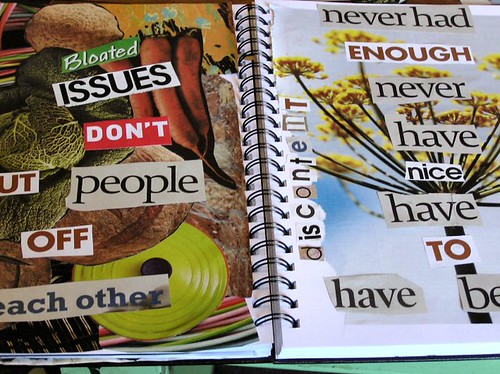
In her own words, it details the story of Lucia Lopez, a young woman involved in gangs in Chicago. Your heart breaks, listening to her tell frankly about her childhood, "Since I was a little girl growing up, I never had an okay day."
By a fluke, she falls into a youth theatre program and lands an opportunity to tell her life story on stage as part of a play. Through storytelling, Lucia changes herself from someone enmeshed in a world of violence to someone in control of her own life.
She says "I would tell people, 'What are you looking at? Do you have a problem? Don't be lookin' at me like that because, you know, something could kick off...'" She feels like she needs to beat up anyone who looks at her. Later, on stage, she realizes that hundreds of people are looking at her... and they're supposed to. Describing this transformation, she giggles and says, "I'll be like, wow. I guess I gotta get used to it. I can't be attacking everyone who's looking at me during the play!"
This episode was recorded a few years ago, but the message is timely.
I have to applaud Ira Glass for his frank statements about the importance of afterschool programs in this episode. He references a study Shirley Brice Heath conducted over ten years, studying 120 afterschool programs. She stumbled upon a finding that surprised even her; Ira Glass describes,
It is still hard to advocate for funding for arts programs, arguably even harder than when this program was recorded. And yet anyone who has led or participated in such programs can attest to their power."Arts programs were more effective at changing kids lives than any other kind of program for kids. More than sports and academic programs, more than community service programs. The art kids not tended to come from worse backgrounds than kids in the other programs... but after being in these programs, they became kids who were more likely to read for pleasure, they were more likely to be in honors societies, get academic honors, they were more entrepreneurial, they started projects, they were more willing to teach other kids.
"Shirley Brice Heath said that's because the arts programs tended to involve kids in more collaborations with each other. They were just doing harder stuff. And critiquing it, and making big plans, and contingency plans, and reevaluating plans, and they learned all these verbal skills.
"Her study also showed that although those programs are the most effective at helping the kids who are the most at-risk in our society, they have a terrible time staying afloat. Nine out of ten of them can't find funding sources and die within eight years."
Lucia herself agrees that the fact that she was in an arts program specifically was essential to her transformation. She describes doing this play as a tool she used to look at everything that had happened in her life, let it go.
At the end of this episode segment, Lucia performs a short narrative scene from her own play. Don't miss it.



 Posts
Posts


